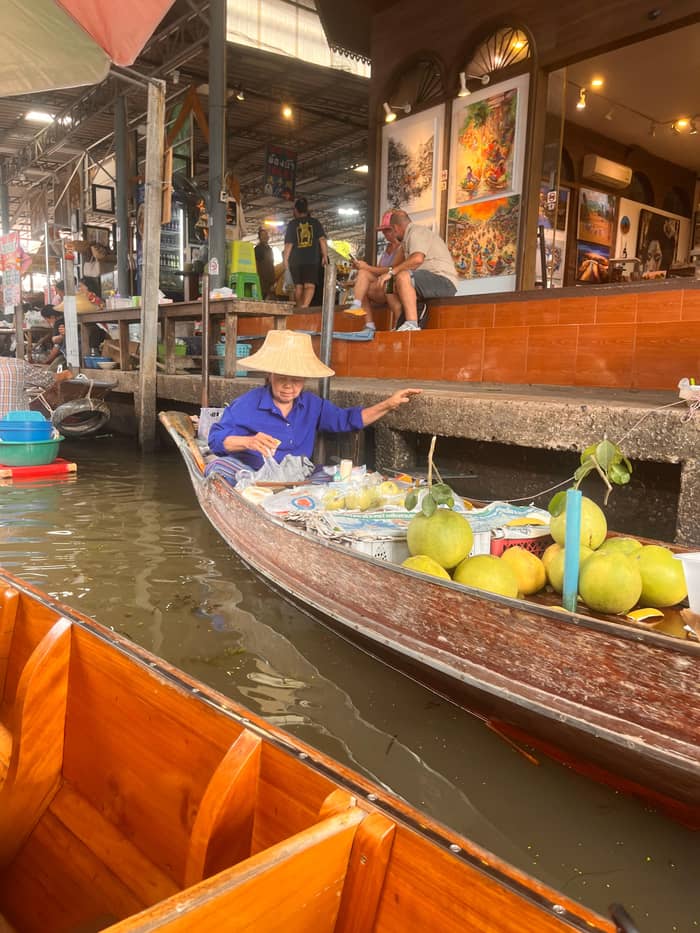
Easiest
The bank
Steady and dry
- DryYes
- WaitingTime to frame
- SprayNone
Interactive to-do list
Things to do · 9 items
Check things off as you go; your progress is kept on this device.
0 / 9 ready
You are ready. Only the date and your pickup option are left to choose.
Get a seatHow to come home with pictures you like: where to stand, which boat to be in, when the light and the canals are at their best, how to ask before a portrait and what the drone rules say.
Editorial team, damnoensaduaktour.com · Updated November 12, 2026 · Takes 7 min
The essentials
Start with the photograph everyone wants: a narrow canal, wooden boats piled with fruit and stalls along the banks. The Tourism Authority of Thailand describes sellers working the canals from wooden boats, with fruit, vegetables and other goods on board,5 and adds that rowboats trade there through the morning.1 From a landing stage or a bank, you can frame the boats against the water and the houses behind them, with room to wait for a good composition.
Photographing from the bank is the easiest way to get a clean frame. You are stable, your camera stays dry, and you can wait for a boat with a colourful load to pass the gap between posts or roofs. Use the gap to frame, look for a vendor in a wide hat rowing towards you, and shoot a short burst as she passes. A moderate zoom, roughly a standard to short telephoto lens, compresses the busy canal into layers and keeps strangers' faces from dominating the frame.
Pay attention to the background. A tidy picture here is about what you leave out: parked motorbikes, plastic chairs, power lines. Move a step or so and the frame changes completely. Look at the water too. Reflections from fruit and hats can fill an empty corner, and a low angle brings the boat's colour and the ripples together. If the canal is crowded, wait for the gap between groups and take the shot when it opens, rather than rushing the first frame.
Pick a viewpoint
| Shot | Where from | Gear |
|---|---|---|
| Boats and fruit | The bank or a landing stage | Short telephoto |
| Among the vendors | A paddleboat, seated low | Wide lens, strap on |
| Speed and spray | A long-tail ride | Waterproof bag |
| Portraits | Face to face, after asking2 | Standard lens |
| Temple details | From a respectful distance6 | Quiet, no flash |
| Aerial view | Only with full registration3 | Registered drone |
Viewpoints from the tour listings and TAT's etiquette and drone guidance; gear is advice.2
Pictures from the water feel different, since you are inside the scene. The site's own tour reaches the floating market by paddleboat, a boat listing adds a 40 minute long-tail ride, and a private listing says a vendor will sell a long-tail ride of 25 to 30 minutes for around 150 Baht. Each gives you a different seat: low and quiet on a paddleboat, fast and noisy on a long-tail.
From a boat, keep a strap on the camera and a firm grip on the gunwale. Hold the phone or camera low, close to the water, and shoot toward the stalls; this gives the most depth and a sense of being among the vendors. Brace your elbows against your body and use a fast shutter, because the boat moves. On a long-tail, spray is a real possibility, so wrap the camera in a small waterproof bag with a clear window for the lens.
Do not expect long stretches of open water. A listing warns that the boat ride usually faces heavy traffic at Damnoen Saduak and that the tour therefore does not include the ride inside the canal. Shooting in a queue of boats gives you something different from the empty-canal picture of the postcards: elbows, hats and vendors close enough to touch. Embrace that, and shoot the crowd as part of the story. Wide-angle frames from the boat show the density of the market better than a tight crop.
A photo morning
First light
The earliest hotel pickup of the site tour is 5:50 AM.
Early morning
Rowboats sell fruit and snacks.1
Mid-morning
A paddleboat on the site tour, or a long-tail ride.
Late morning
Ask before you photograph a vendor.2
Photo stop
A listing names it as a photo stop.
Departure
Back up your pictures on the coach.
Light is the first thing to plan. TAT puts the busy trade early in the day,1 and a low sun gives warm colour and long, soft shadows across the water. By late morning the light is overhead and harsh, with bright reflections and dark under the awnings. If you can choose, take the earliest departure. A listing recommends its earliest departure for fewer tourists, while the site's own tour has hotel pickups from 5:50 AM.
Fewer tourists helps the photographs as much as the experience. TAT's feature on Ratchaburi says the market has bounced back from past overtourism and feels like a working market for local shoppers, which is the setting this guide assumes.7,8 Good pictures in that setting show work: a vendor weighing fruit, a boat being poled around a bend, hands exchanging money. Those frames need a quiet stretch, and an early start gives you more of them.
Weather matters in another way. Overcast skies give soft, even light that suits portraits and food, while sun is better for colour and reflections. Carry a lens cloth, because humidity fogs glass in the first minutes after air-conditioned transport. If rain arrives, put the camera away, wait under an awning and shoot the wet canal afterwards, when the colours are deeper. The listing for the Dragon Temple day advises bringing comfortable clothing, a hat, sunscreen and a camera, which covers much of what a sunny day needs.
What to carry
Say how you shoot, and the plan follows.
If I shoot with a phone
Bank first, boat second
A phone is easy to protect and quick to raise.
If I want portraits
Ask, then shoot
Do not get in anyone's way.2
If I want sharp action
The long-tail ride
The ride lasts 40 minutes on a listing.
If I want to avoid crowds
Take the earliest start
A listing recommends it for fewer tourists.
If I want aerial pictures
Register first
Both NBTC and CAAT registration are mandatory.3
Choose a seat
Easiest
Steady and dry
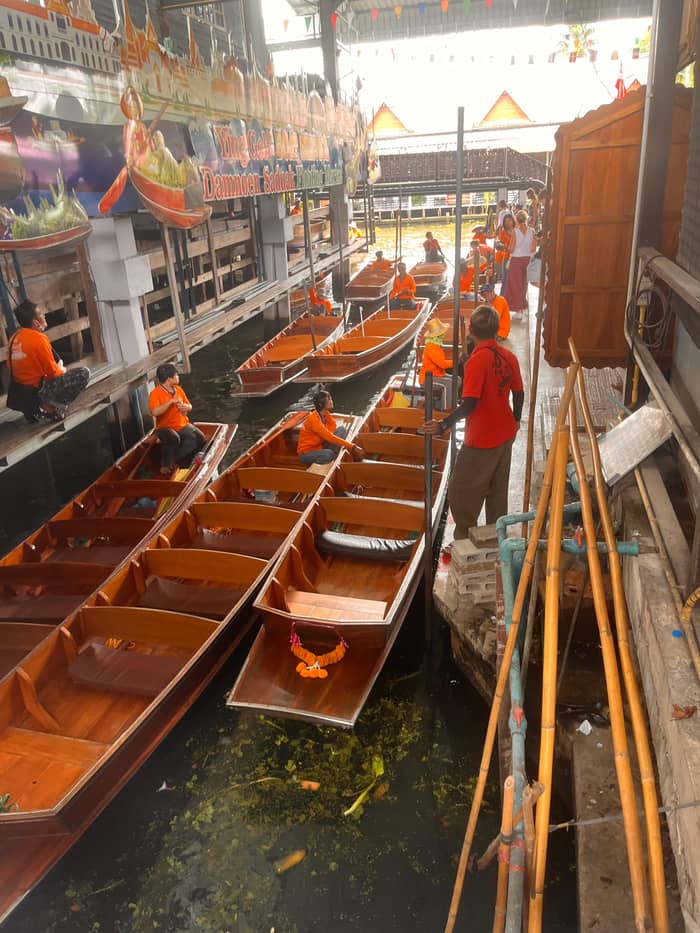
Immersive
Low and quiet
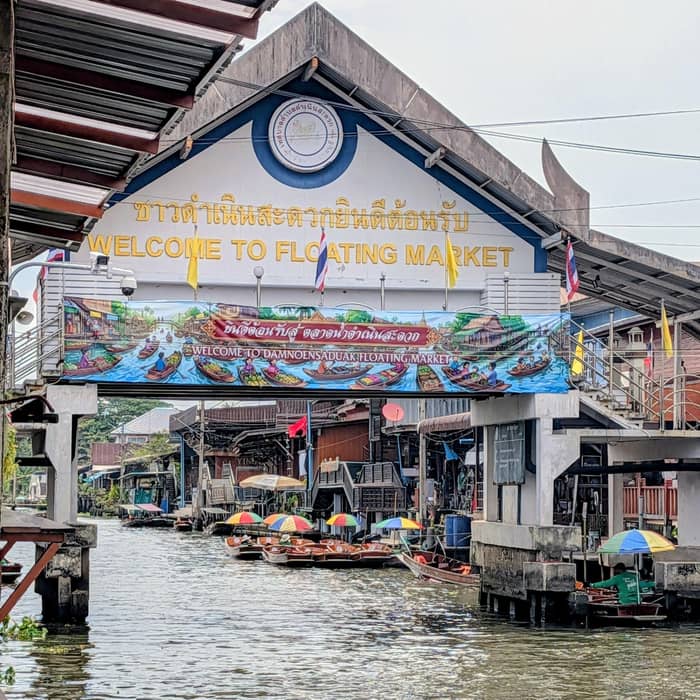
Dynamic
Fast and splashy
The vendors are working, and they are the subject of many photographs, and manners matter. TAT's note on temple etiquette gives a principle that works at a market too: do not block anyone to get your shot, above all anyone at prayer or giving a donation.2 On the canal, that means not blocking a boat, not leaning into a stall and not holding up a sale to compose a picture.
Ask before taking a close portrait. A smile, a raised camera and a questioning look are understood everywhere, and a vendor who nods gives you a livelier picture than one photographed from a distance. If someone declines, accept it. A small purchase from the stall is a natural way to say thank you. Never photograph children without a parent's agreement, and do not share an identifiable portrait online if the person asked you not to.
Temples and monks follow separate rules. TAT says most temples allow photographs,6 asks men for sleeved shirts and long pants or knee-covering shorts,9 and says women must not touch a monk or the robes he wears.10 It also advises silencing your phone.11 If you add a temple to the day, take pictures from a respectful distance and do not stand between a monk and the people who are making offerings.
Choose your boat day
Enter your party size to compare tours with a boat ride or a photo stop.
Weigh up 3 options
Enter your party size to compare tours with a boat ride or a photo stop.
≈
View≈
View≈
ViewCurrency conversion uses the ECB reference rate on GetYourGuide from-prices. The exact price is displayed when you book.
For a Damnoen Saduak floating market video, think in short clips. Shoot a few seconds of boat movement, a few of a vendor at work and a few of the surroundings, then join them in the order you like. Hold the phone sideways for a travel film and vertical for social media, and keep the same orientation throughout one clip. Narrate nothing while you shoot; add the sounds of oars, bargaining and engines instead, because the audio carries the atmosphere better than your voice does.
Drones are a regulated matter in Thailand. TAT says drone operations are permitted in most areas when operators are registered and follow aviation rules,13 that both NBTC and CAAT registration are mandatory,3 and that CAAT registration is additionally required for drones with cameras.14 Flight details go to CAAT through the UAS Portal at least three days ahead, and a Thai SIM card is needed to start registration.15,16 Breaking the rules can mean up to one year in prison, up to 40,000 Baht in fines, or both.17
We found no official statement on drones at this market, and TAT advises checking airport rules, national park requirements, local restrictions and site-specific conditions before flying.18 On a canal filled with boats and people, flying a drone is rarely practical in any case. Leave it at home on a standard day tour, which has no spare time for permits, and take your pictures from the bank and the boat. Keep cameras in a sealed bag between shots, and carry a spare memory card and battery.
Video
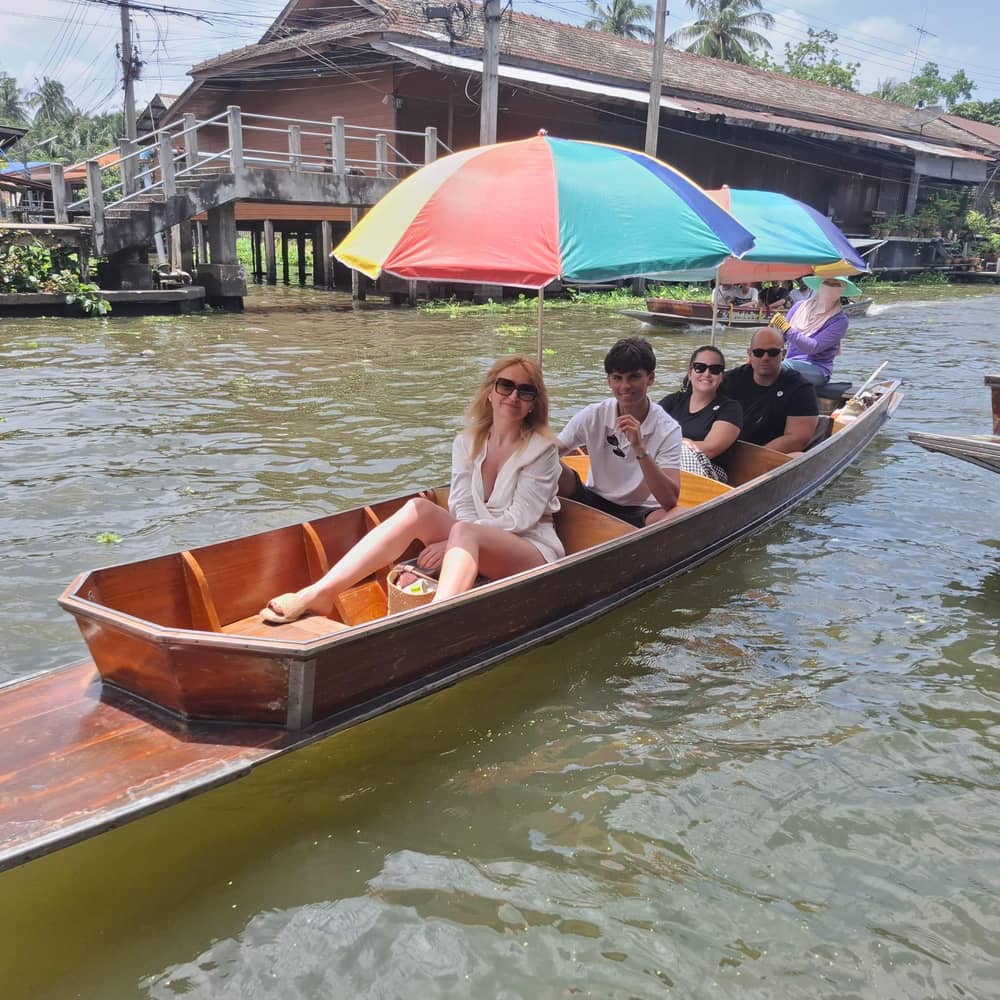
Ice Pandaica on YouTube · Until you tap play, no video is loaded.
it’s considered rude to get in anyone’s way to take a shot, especially those who are praying or making a donation
A Damnoen Saduak floating market caption should say what the picture shows, and add a small detail. A few lines of our own to borrow: Fruit by the boatload, fresh at dawn. The shop comes to you, one paddle at a time. Hats, hand-written prices and a canal that never sleeps in the morning. Keep them short, and name the place so that a friend can find it again. Write something specific about the person or the dish rather than a general phrase about adventure.
Context makes the story richer. The Thailand Film Office lists Ratchaburi with 25 foreign productions in 2023, with locations such as Damnoen Saduak Floating Market,4 a reminder that the canals photograph well. On the Bond question, TAT's own article about film locations points to Khao Phing Kan in Phang Nga for the 1974 film.19 Use that kind of context in a caption or a photo album note, because a picture with a sentence of background is more useful to the friend who reads it than a bare image of a boat.
Finally, edit hard. Choose a handful of pictures that tell the story: the wide canal view, a vendor in action, a food close-up and a quiet detail like a pile of fruit. Delete the near-duplicates, straighten the horizons and keep the colour natural. If you travelled on a day tour, add a note about the time of departure and the boat type, which helps others plan. In an emergency on the trip, the Tourist Police hotline is 1155.12
FAQ
Early, since TAT puts the canal trade in the morning.1
TAT's etiquette note says to keep out of people's way when taking a photo.2
The site's tour uses a paddleboat, and another listing adds a long-tail ride of 40 minutes.
The Thailand Film Office names it among Ratchaburi's filming locations.4
A long-tail boat can throw spray, so keep the camera in a waterproof bag between shots.
Sources
Heading to Damnoen Saduak? Ask a real person here.